
Key takeaways
-
- Financial advisor marketing works best when it reduces uncertainty, not when it “sells harder.”
- Prospects trust advisors who feel clear, honest, and steady, especially under pressure.
- Credentials help, but specificity and tone often do more to make someone feel safe.
If you’re reading this, you probably aren’t selling a product with a 30-day money-back guarantee.
You’re a financial advisor. You’re asking someone to hand over their life savings, their retirement timeline, their kid’s college fund, and the stuff they don’t like talking about at social events.
That’s… a lot. And it’s why trust isn’t a “nice-to-have” in your marketing strategy. It kind of IS your marketing strategy.
But trust takes time. That’s the tricky part.
Why financial advising has a long decision cycle
Deciding to hire a financial advisor isn’t something a person randomly decides on one morning. It’s strategic–keeping more of what they’ve built. Money is emotional and the stakes are high.
A long-cycle industry like financial advising comes with built-in friction. Fear of making mistakes, past baggage, overwhelm and confusion, and avoidance can all make the decision drag on for months… even if they like you.
What “trust” actually means to prospects
Trust often comes down to three questions running around in your prospect’s head:
1. Do you get people like me?
Prospects are scanning for signals. They are looking at their own life stage, values, communication style, and deciding whether or not you understand their real world.
2. Will you tell me the truth, even when it’s uncomfortable?
People can sense when they’re being “handled.” If everything sounds too polished and perfect, they want to know, “what’s the catch?”
3. Will you show up when things go sideways?
Anyone can sound confident during a bull market. But can you handle stress? Will you stay calm when your client is in panic mode? They need to know they can count on you to stay steady. That’s how trust gets built.
But trust isn’t a single claim you make. It’s a pattern that people notice over time.
The Trust Trap: overdependence on credentials and expertise
Credentials matter. Education matters. Experience matters. No argument here.
But to prospects, that expertise can mean distance.
When your marketing leans too heavily on the alphabet after your name, bragging about the awards you’ve won with no context, complicated charts and jargon, or a rundown of stats that feels like a math test, you may be proving you’re qualified, but you haven’t proven that you’re safe–or likeable.
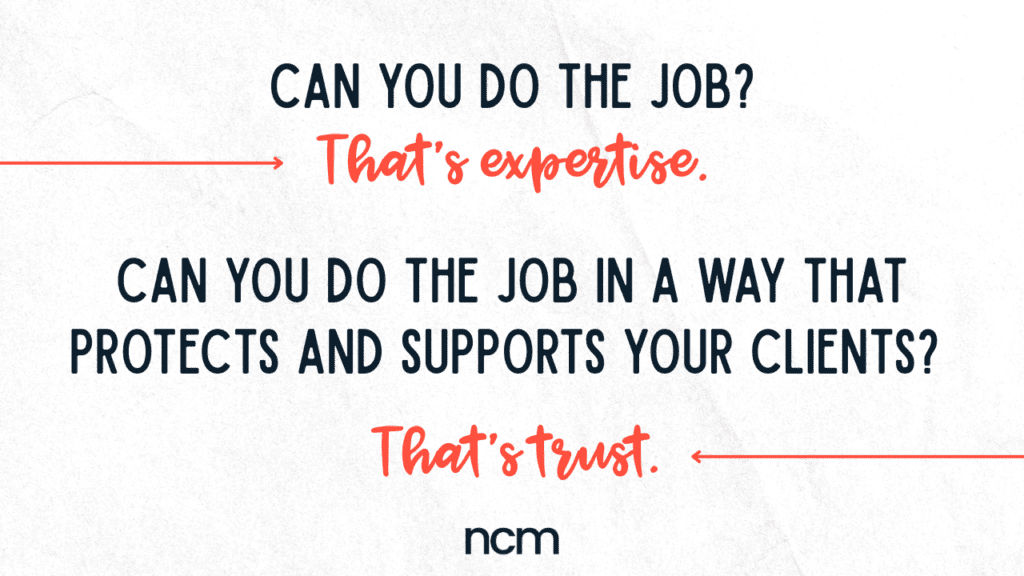
Can you do the job? That’s expertise.
Can you do the job in a way that protects and supports your clients? That’s trust.
Why trust-building feels harder than it used to
Trust is harder to earn right now. You’re not imagining it. People are overloaded. Every time a prospect picks up their phone or checks their email, they are inundated with information.
Prospects are dealing with endless options, scary headlines, shorter and shorter attention spans, and skepticism from constantly being targeted by ads and sales pitches disguised as LinkedIn connections. They’re already tired. They’re already stressed. They’re already cautious. They need more touchpoints before they commit. That’s normal.
Trying to convince them isn’t the right course of action. You need to reduce uncertainty.
How AI is making trust harder to come by
AI has changed how people judge credibility. It’s unfortunate, but it’s a part of life in 2026.
AI isn’t evil. In fact, it’s incredibly beneficial when utilized the right way. But it’s made content cheaper, faster, and easier to mass-produce–and prospects can see and feel that.
The trust challenges of AI:
-
- Content sameness: Blogs and posts start to look and sound identical no matter who posts them
-
- Too-polished messaging: When everything is just too perfect it stops sounding human
-
- Misinformation risk: AI doesn’t get it right every time, so people start to question everything
-
- Fake authority: It’s easier than ever for someone to look like an “expert” online
If your prospects are thinking, “Was this written by a person who understands me?” but AI is the one writing, well… that’s a problem.
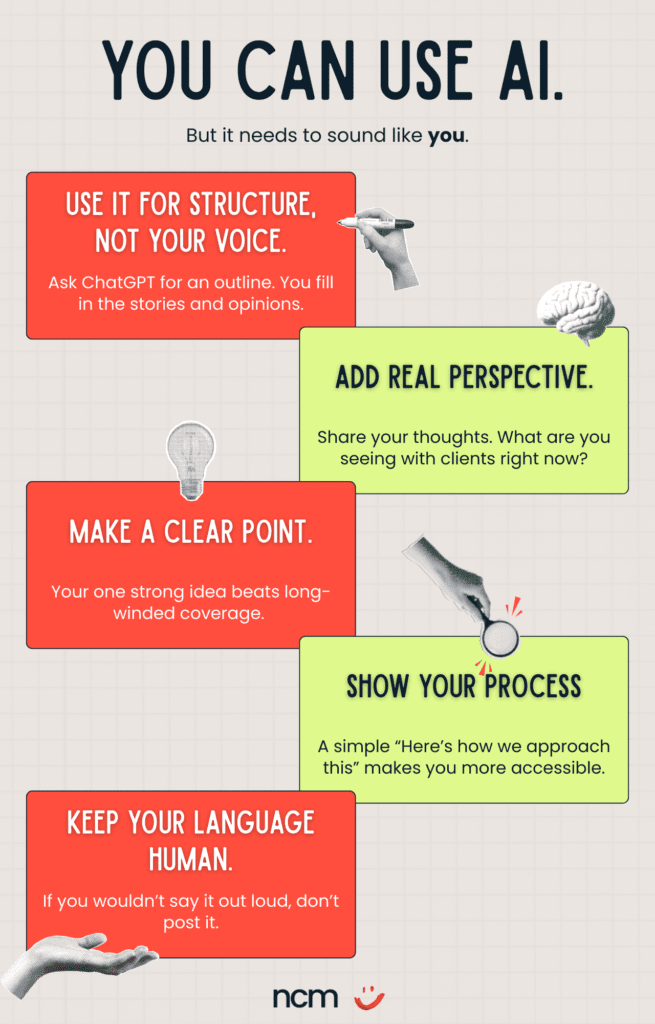
You can use AI. But it needs to sound like you.
-
- Use it for structure, not your voice. Ask ChatGPT for an outline. You fill in the stories and opinions.
-
- Add real perspective. Share your thoughts. What are you seeing with clients right now?
-
- Make a clear point. Your one strong idea beats long-winded coverage.
-
- Show your process. A simple “Here’s how we approach this” makes you more accessible.
-
- Keep your language human. If you wouldn’t say it, don’t post it.
What financial advisors can do to build trust faster in marketing
Everyone wants an instant solution. But when it comes to trust, that’s not likely to happen. It takes time, but you can make that time work harder.
Answer the questions people are afraid to ask
We’re not talking about “what is a Roth IRA” kind of stuff. The real stuff. Like, “what happens if I retire early and the market drops?” or “Is my investment strategy in line with my long-term goals?” The things that have someone running to Google at 1 AM.
How to do it: Start a “no one wants to ask this” content list and turn it into a monthly series.
Tip: Open your inbox (or notes if you keep them) and write down the last 10 anxious questions you’ve heard from clients or prospects. You can easily turn that into a LinkedIn post, Reel, or newsletter. These are content goldmines.
Borrow credibility from specificity, not hype
Instead of “holistic wealth management,” try clearly explaining who you serve, what problems you solve, what your process is like, and what you do during volatility. Specific = believable.
How to do it: Replace vague service phrases with “who + what + how it works.”
Example: Instead of “Comprehensive financial planning,” try: “We help pre-retirees create an income plan that supports their lifestyle and long-term goals.”
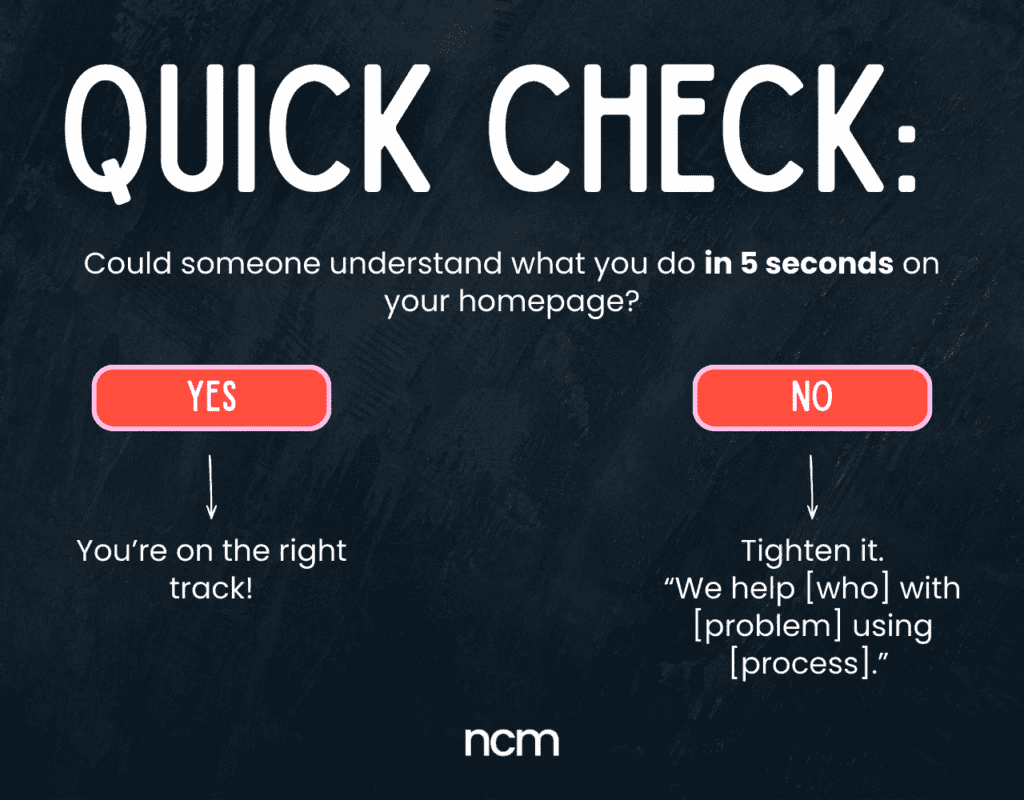
Quick check: Could someone understand what you do in 5 seconds on your homepage? If not, tighten it → “We help [who] with [problem] using [process].”
Be consistent enough to feel familiar
Prospects are more likely to hire the advisor who feels like the least risky choice.
How to do it: Choose one channel you can actually sustain (email, LinkedIn, Facebook) and commit to a realistic cadence.
Example: A simple weekly email that explains one concept and links to one resource.
Tip: Set a recurring calendar block to create one piece of content per week. Keep a running list of “next topics” so you’re never starting from scratch. Writer’s block can happen to everyone. This way, you’re ready.
Show evidence
Proof is priceless. You have that proof. Case studies (anonymous of course), quantifiable data, your systems and processes… all of those things help prospects know exactly what to expect when they work with you.
How to do it: Share what you have already done. Use scenarios, screenshots, and real-world decisions.
Example: A short post like “Here’s how we handled a client’s retirement date when the market dropped.”
Break it down: Use this structure to write mini case stories:
-
- The situation: “Client was worried about ________”
-
- The decision: “We chose _______ because ________”
-
- The result: “They ended up with/felt _______”
Make it easy to take a small first step
A long cycle can shrink when the first step is low-pressure. Think short “intro calls,” a simple downloadable, a sales-pitch-free webinar, or an email series sharing one idea at a time. You’re not giving away the farm, but providing a little value up front goes a long way.
How to do it: Offer a low-pressure entry point with clear expectations so people know what they’re signing up for.
Example: A booking page that says “In 15 minutes, we’ll cover your top question, whether we can help, and next steps.” NO PITCH DECK.
Wrap it up
One polished post or fancy credential won’t gain you trust. It comes from a steady pattern:
-
- Clear language
-
- Specific messaging
-
- Consistent presence
-
- Real examples
-
- A human voice
You don’t have to win everyone this week. You just need to stay credible, familiar, and easy to choose when they’re ready.